This is the public record behind the artifact: what changed, what another person can reuse, what supports the system, and what the build is not entitled to claim.
MAKING
What changed
Reviewed the public overview, A route, B screening room, film/transcript and distribution language as one claim surface.
Separated cited context from RN analysis, design propositions, fictional fixture content and observable prototype behavior.
Published this record only for the qualified reviewed disposition.
METHOD
What travels
Keep synthetic records unmistakably synthetic.
Attach each named source to its exact locator and scope limit.
Do not convert contextual guidance into validation, compliance, safety or outcome evidence.
EVIDENCE
What supports it
Source classification: RN synthetic research record.
Exact locator: Overview, A, B, film, captions and transcript.
The source supports only the bounded context stated here; the prototype and its interface rules remain RN synthesis and implementation.
LIMITS
What it cannot claim
Turn interviews into people, claims, themes, evidence, contradictions and follow-up questions.
The interview, participants, conflicts and follow-ups are fictional. The record is not representative, verified, consent evidence or a substitute for privacy review.
Claim-reviewed does not validate effectiveness, safety, compliance, representativeness, cultural authority, professional suitability or outcomes.
VISUAL ASSET REVIEW
Hook image, source candidate, and release gates
The creator-owned cover remains live unless every external-candidate gate is explicitly complete. Disabled controls report canonical status; they do not imply an approval action occurred here.
Use the complete 720×900 frame. Do not crop the build number, headline, safe margins or boundary language.
This creator-owned opening frame supports only the visible build proposition and build identity. It is not documentary evidence and does not establish institutional endorsement, lived experience, product performance, safety, compliance, effectiveness, causation, community authority or outcome.
Official visual candidate
Disposition: HOLD
HOLD — primary-source terms reviewed; no exact asset-level authorization established.
Crop: Not applicable until an exact asset is selected and its integrity and rights are verified.
Alt text:
Credit: Source-page issuer: Library of Congress; asset credit unresolved because no asset is selected.
Claim boundary: The official page is relevant context only. It does not make an unspecified image evidence of the build, its outcomes, safety, compliance, effectiveness, or endorsement.
EXTERNAL SOURCE REVIEW · HOLD · NOT SELECTED · NOT STAGED
Exact-source acquisition decision
Classification: NO EXACT SOURCE
HOLD — primary-source terms reviewed; no exact asset-level authorization established.
Attribution: Source-page issuer: Library of Congress; asset credit unresolved because no asset is selected.
Alt text: Review record for Library of Congress in relation to Build 062, The Interview Is More Than a Transcript. No external asset is selected or staged.
Caption: Official-source context reviewed for Build 062; external visual remains on HOLD.
Claim boundary: The official page is relevant context only. It does not make an unspecified image evidence of the build, its outcomes, safety, compliance, effectiveness, or endorsement.
Fallback decision: Retain the original RN cover. No external promotion is authorized.
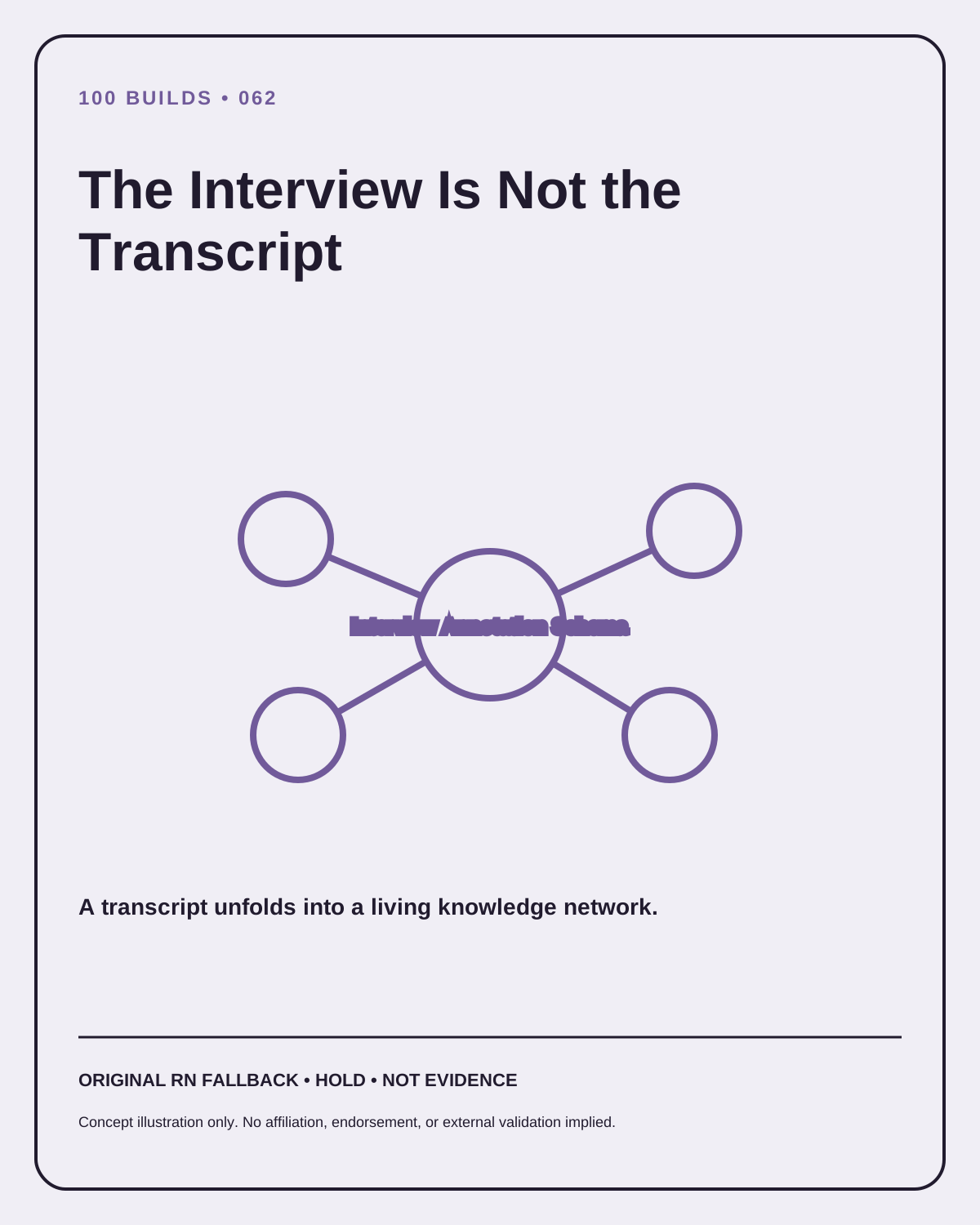
Original HOLD fallback graphic
ORIGINAL RN FALLBACK • HOLD • NOT EVIDENCE
Original RN-created fallback diagram for Build 062, “The Interview Is Not the Transcript.” It illustrates the build concept and is not evidence of external validation, performance, compliance or endorsement.
This generated RN-owned fallback is available for review while the third-party candidate remains on HOLD. It is not selected external evidence and does not change staging status.
1. Hook A TRANSCRIPT IS NOT THE WHOLE INTERVIEW.Visual, rights, and accessibility instructions
Use the complete RN-owned cover at /media/builds/062/build-062-linkedin-poster.png. Do not crop text, credits, safe margins, or claim boundary.
Claim boundary: This creator-owned opening frame supports only the visible build proposition and build identity. It is not documentary evidence and does not establish institutional endorsement, lived experience, product performance, safety, compliance, effectiveness, causation, community authority or outcome.
Accessibility: Slide 1 alt text must identify Build 062, the hook function, essential visible text, and the information conveyed by the visual. Keep reading order headline → visual → boundary/credit.
Rights: Creator-owned production asset; no third-party visual identified or implied.
2. Problem The problem: The Interview Is More Than a Transcript fails when the underlying decision, audience, or evidence boundary is left implicit.Visual, rights, and accessibility instructions
RN-owned problem framing: isolate the tension behind “A TRANSCRIPT IS NOT THE WHOLE INTERVIEW.”. Use typography plus one simple contrast or decision fork; no stock people.
Accessibility: Slide 2 alt text must identify Build 062, the problem function, essential visible text, and the information conveyed by the visual. Keep reading order headline → visual → boundary/credit.
Rights: Use RN-owned typography, diagrams, and verified prototype captures only.
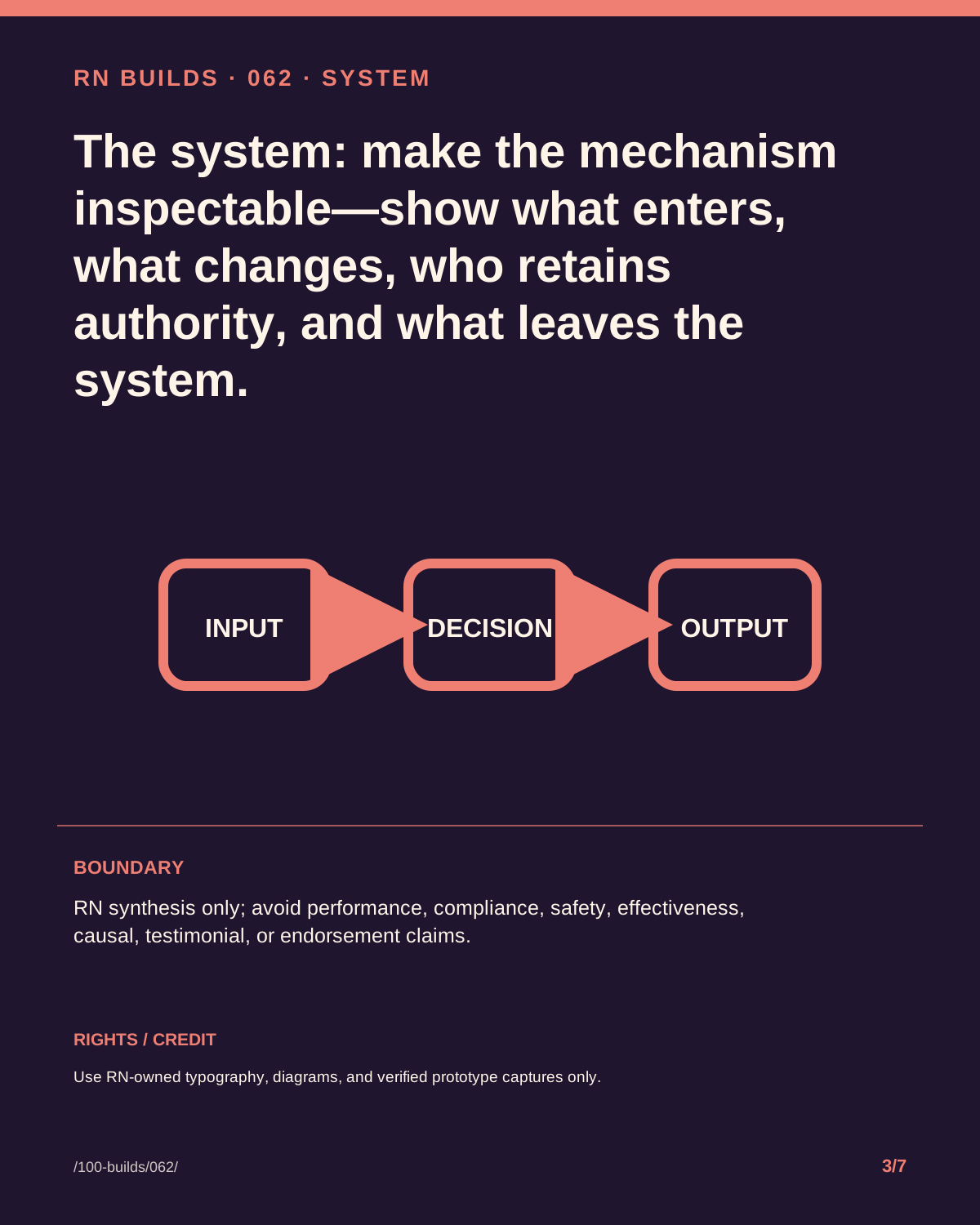
3. System The system: make the mechanism inspectable—show what enters, what changes, who retains authority, and what leaves the system.Visual, rights, and accessibility instructions
Show an RN-owned diagram or prototype view of the The Interview Is More Than a Transcript mechanism. Label inputs, decision/action, and output; do not depict outcomes not present in the build.
Accessibility: Slide 3 alt text must identify Build 062, the system function, essential visible text, and the information conveyed by the visual. Keep reading order headline → visual → boundary/credit.
Rights: Use RN-owned typography, diagrams, and verified prototype captures only.
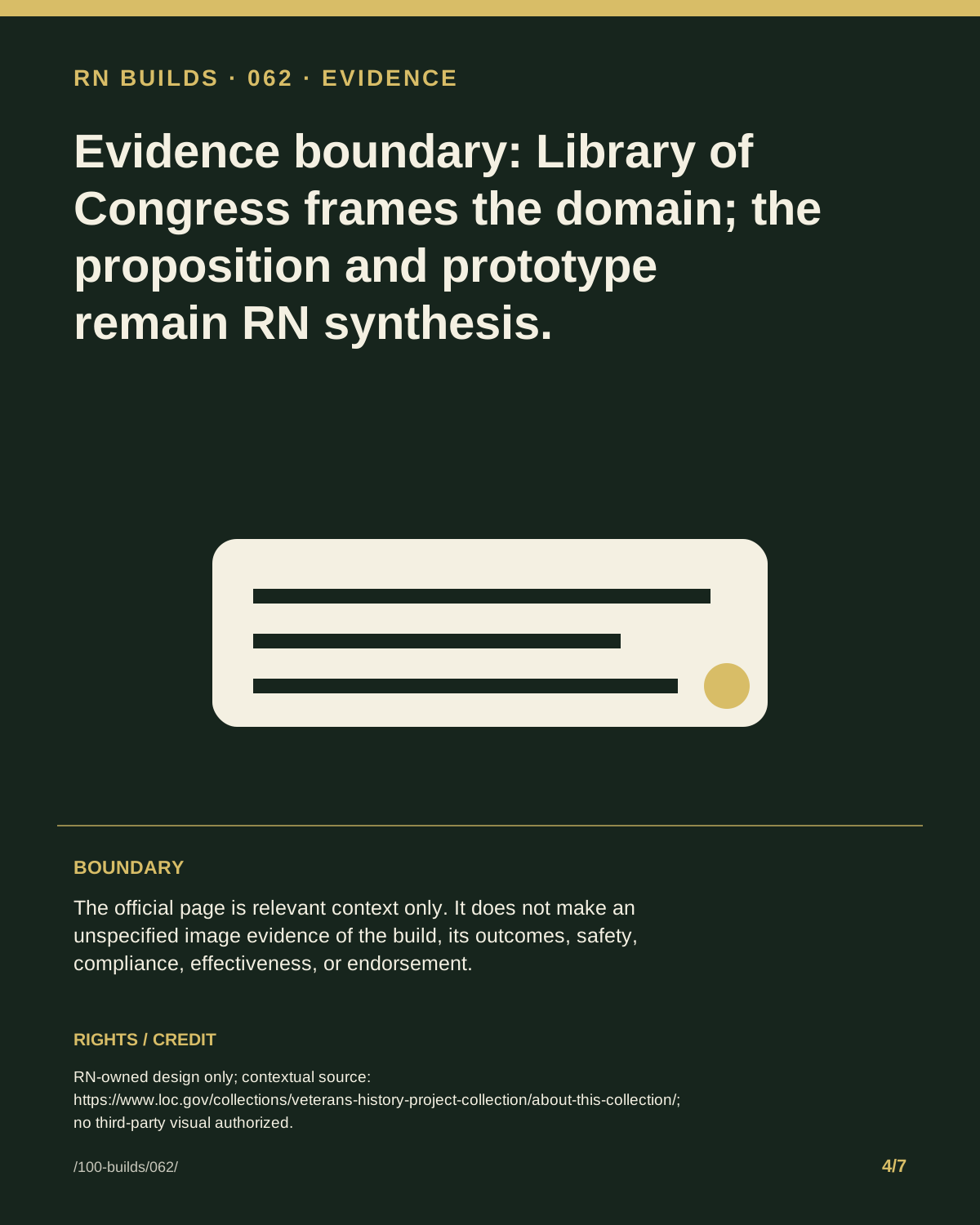
4. Evidence Evidence boundary: Library of Congress frames the domain; the proposition and prototype remain RN synthesis.Visual, rights, and accessibility instructions
Use an RN-owned evidence-boundary card. The recognizable entity “Library of Congress” may be named as context only; do not use its marks, screenshots, portraits, or trade dress.
Claim boundary: The official page is relevant context only. It does not make an unspecified image evidence of the build, its outcomes, safety, compliance, effectiveness, or endorsement.
Accessibility: Slide 4 alt text must identify Build 062, the evidence function, essential visible text, and the information conveyed by the visual. Keep reading order headline → visual → boundary/credit.
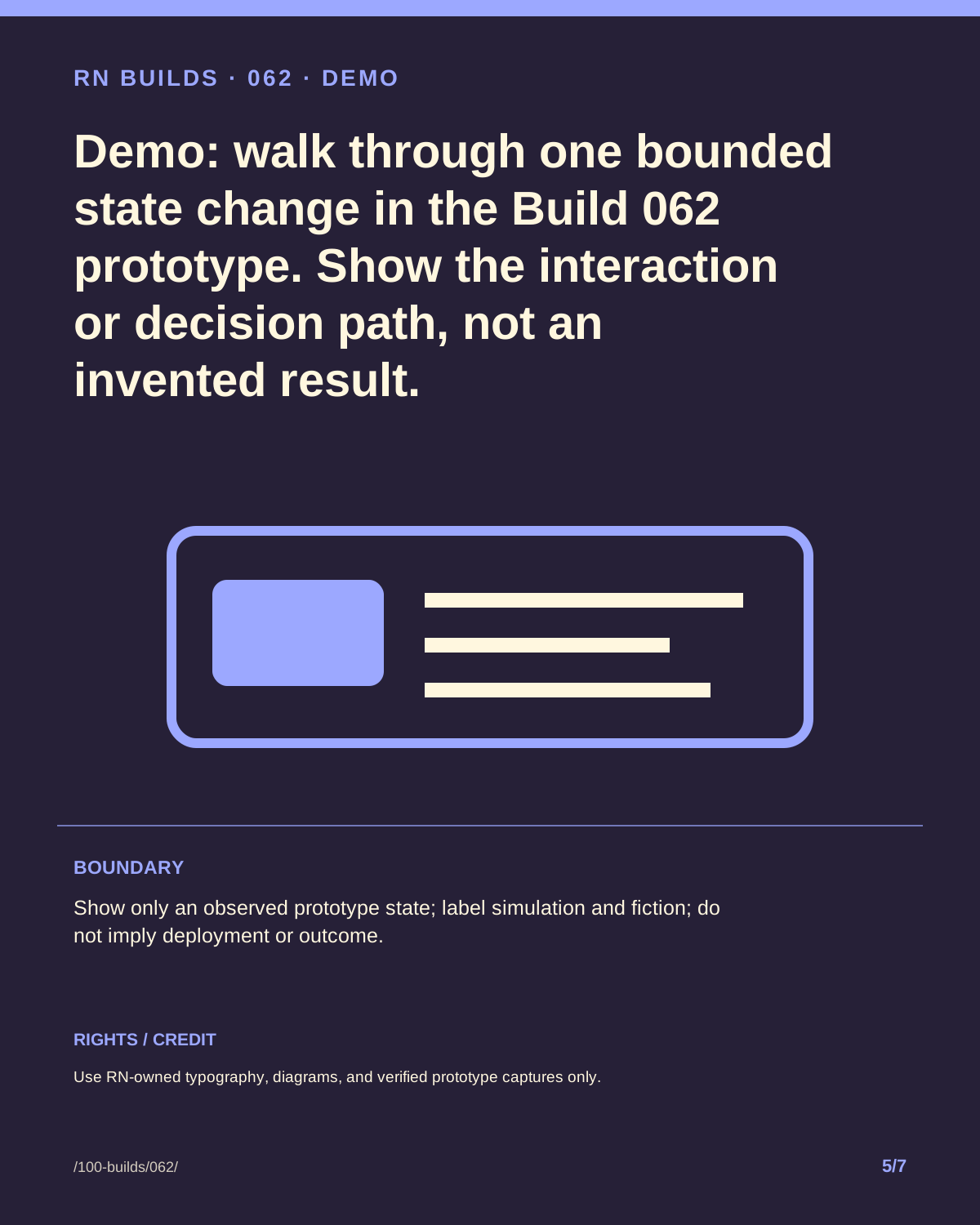
5. Demo Demo: walk through one bounded state change in the Build 062 prototype. Show the interaction or decision path, not an invented result.Visual, rights, and accessibility instructions
Use an authentic RN prototype/interface capture from Build 062, or a faithful RN-owned diagram if no stable interface view exists. Clearly label simulated, fictional, or illustrative states.
Claim boundary: Show only an observed prototype state; label simulation and fiction; do not imply deployment or outcome.
Accessibility: Slide 5 alt text must identify Build 062, the demo function, essential visible text, and the information conveyed by the visual. Keep reading order headline → visual → boundary/credit.
Rights: Use RN-owned typography, diagrams, and verified prototype captures only.
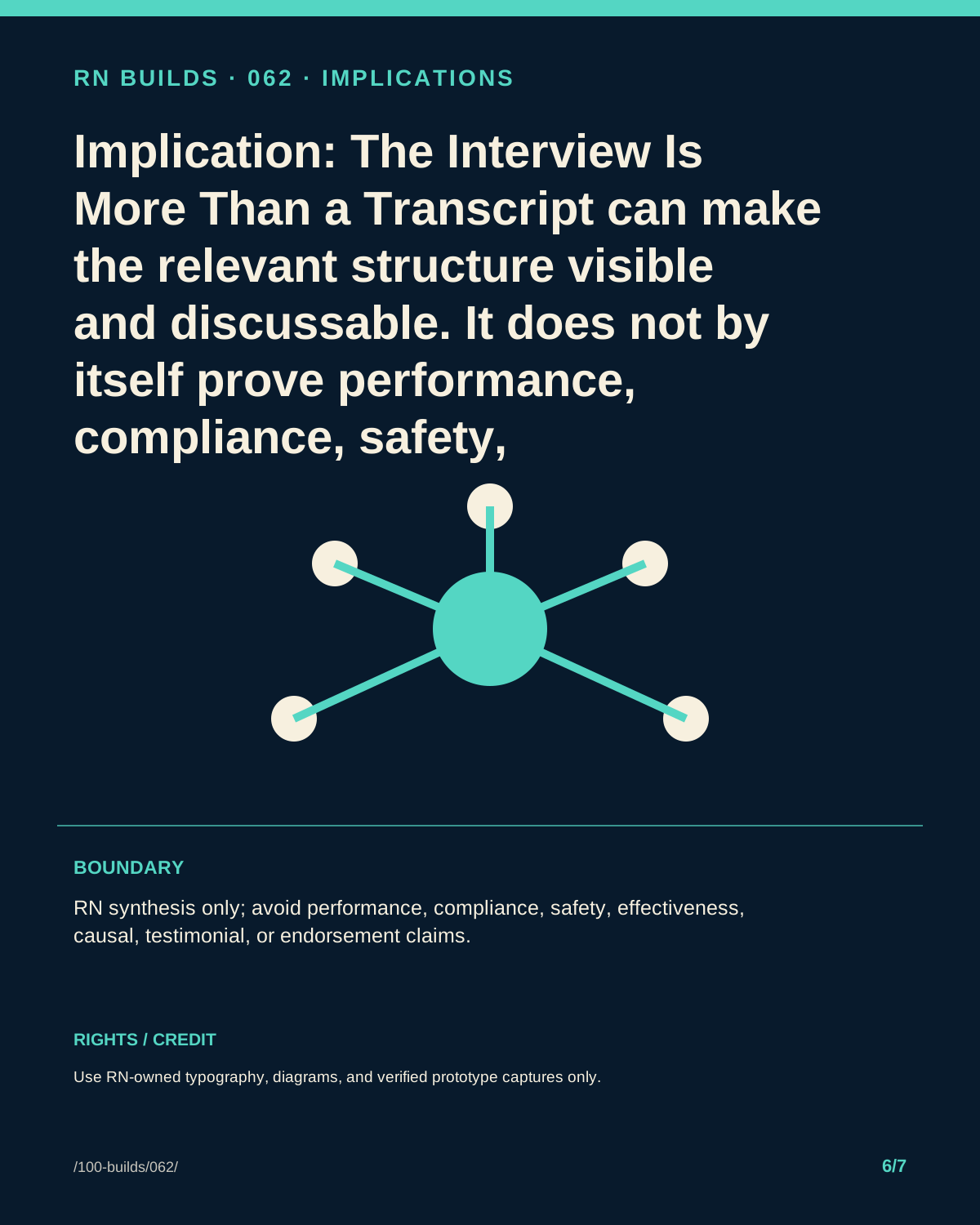
6. Implications Implication: The Interview Is More Than a Transcript can make the relevant structure visible and discussable. It does not by itself prove performance, compliance, safety, effectiveness, causation, or endorsement.Visual, rights, and accessibility instructions
Use a two-column RN synthesis: what this build makes possible / what it does not establish. No universal, causal, safety, compliance, or effectiveness claim.
Accessibility: Slide 6 alt text must identify Build 062, the implications function, essential visible text, and the information conveyed by the visual. Keep reading order headline → visual → boundary/credit.
Rights: Use RN-owned typography, diagrams, and verified prototype captures only.
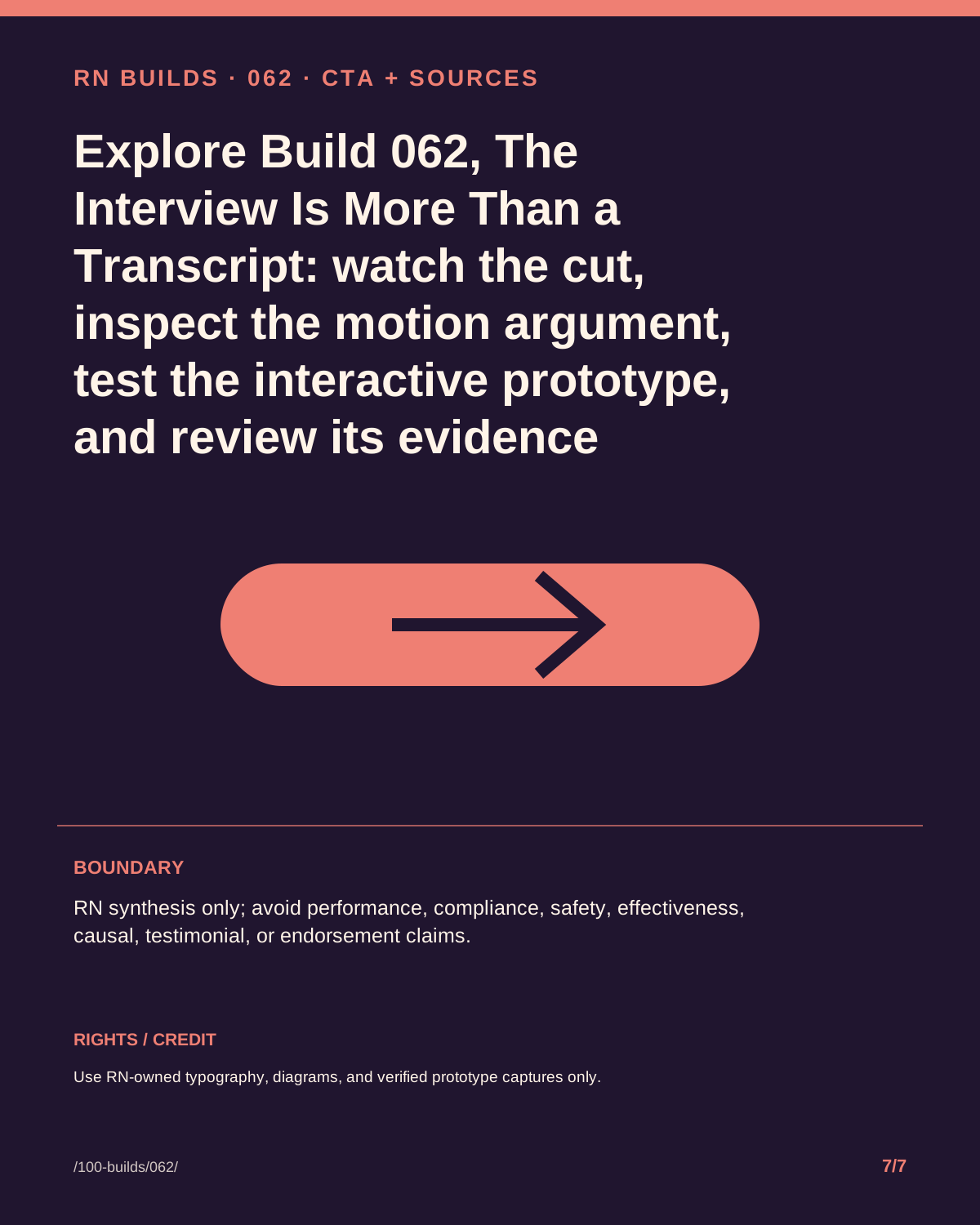
7. CTA + sources Explore Build 062, The Interview Is More Than a Transcript: watch the cut, inspect the motion argument, test the interactive prototype, and review its evidence boundary.Visual, rights, and accessibility instructions
Use a quiet RN-owned closing card with Build 062, the canonical dossier URL, CTA, source/credit line, and “RN synthesis · no endorsement” where an institution is named.
Accessibility: Slide 7 alt text must identify Build 062, the cta + sources function, essential visible text, and the information conveyed by the visual. Keep reading order headline → visual → boundary/credit.
Rights: Use RN-owned typography, diagrams, and verified prototype captures only.
Platform repurposing
Instagram: Publish all seven 4:5 slides; keep credits and boundaries on-slide; write the supplied alt text manually.
LinkedIn: Export as an accessible seven-page PDF; preserve live links in the post copy and use the build dossier as the canonical source.
Reels/TikTok: Animate slides 1–6 as silent-first vertical beats; retain captions, visible source credit, and final CTA; do not imply motion footage is documentary.
Web/newsletter: Use slide 1 as the preview and embed/link the dossier; do not detach the source-context image from its caption, credit, and limitation.
All seven accessible 1200×1500 slides for this build are generated and included in the deterministic distribution packages. Metadata retains exact alt text, visual guidance, credit, source, rights, and claim boundaries.
This build’s current cover and complete metadata are included in the deterministic 100-cover handoff. The package preserves this dossier’s official/RN decision, source, rights, claim boundary, and rollback state.
A public build record has four sections and they are ordered on purpose. Making is the narrative of what changed, written so that someone who was not there can follow the decisions in sequence. Method is the part meant to travel: the rules and structures another person could apply to a different problem in a different field. Evidence is what supports the system, stated as specifically as the underlying material allows. Limits close the record because they determine how far everything above them can be carried.
The reason limits come last is that they are the part most often left out, and a record without them is a marketing page with citations. Every claim in the sections above is bounded by what the final section says, and a reader who skips it will overstate what the build establishes. If you only have time for two sections, read Method and Limits: together they tell you what you could reuse and how far you could trust it.
Where external sources appear, each is given with an exact locator rather than a bare link, so the specific passage relied on can be checked instead of the whole document. A scope limit accompanies each one. That limit describes what the source was used for in this build, which is frequently narrower than what the source as a whole covers, and quoting the source for a broader claim than the scope allows would be a misuse of it even though the link resolves.
Language here is chosen to hold up under scrutiny rather than to sound confident. Where a review is complete, the record says so and names what the review covered. Where a review remains open, the record says that instead, and continues to say it until the work is done. A statement that something is a demonstration, a synthetic fixture or an unverified claim is a factual description of that artifact, and it stays on the page because removing it would make the surrounding claims read as stronger than the evidence supports.
Finally, this record documents one build among a hundred that are designed to inherit from each other. What Method describes is often the thing a later build depends on, so a record is worth reading alongside the lineage view rather than purely on its own. That is where the capability described here can be traced forward into whatever was built on top of it.